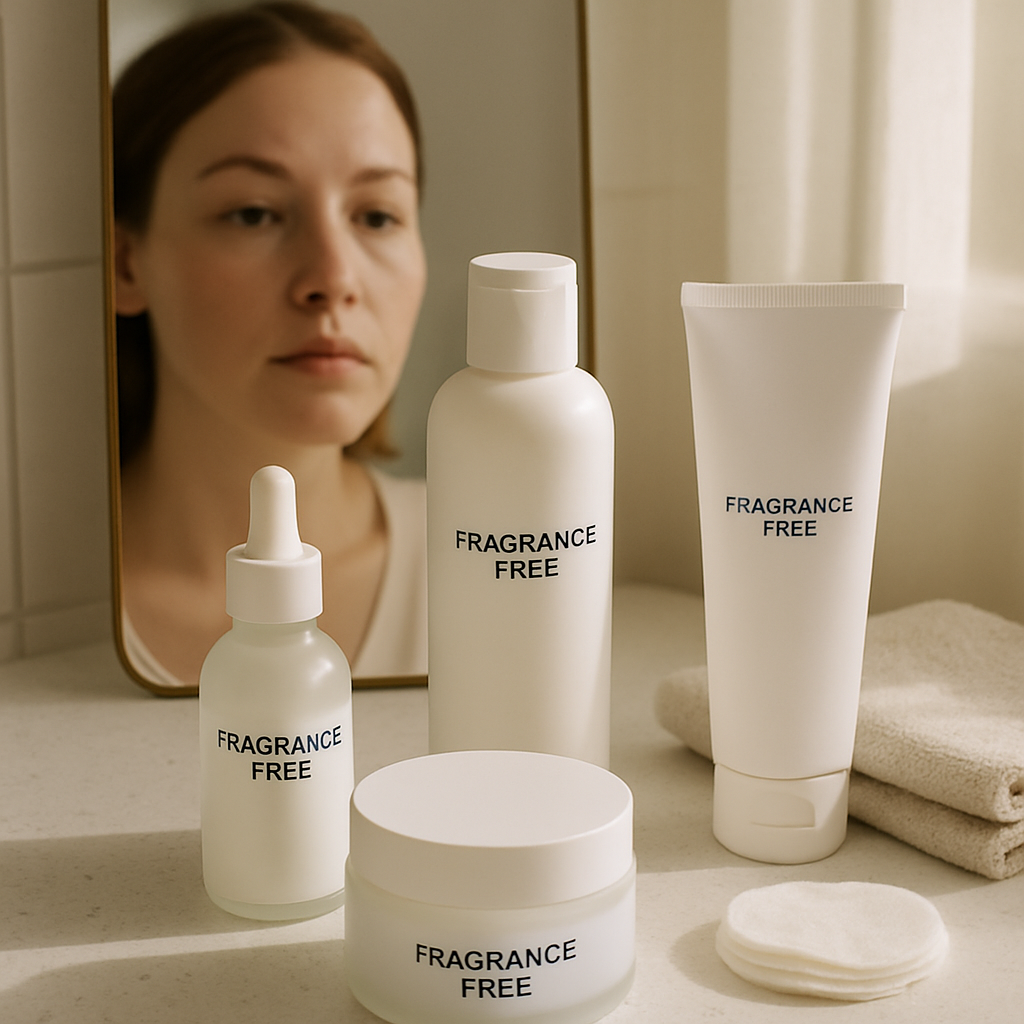
30 Days of Fragrance-Free Skincare
Your moisturizer beneath sunscreen and suddenly your whole morning feels personal. Now imagine replacing every scented product with fragrance-free alternatives for a full month. That’s exactly what I did—partly out of curiosity, partly because my cheeks were reacting negatively to my usual floral-scented skincare.
Here’s an honest breakdown of what happened during 30 days without fragrance, with no rose petals or citrus notes, just science-based skin observations and a few emotional ups and downs along the way.
Why Choose Fragrance-Free Skincare?
- Fragrances, especially synthetic ones, can irritate, sensitize, and inflame your skin without you immediately noticing. According to the American Academy of Dermatology, fragrances are a leading cause of allergic contact dermatitis—meaning your skin reacting adversely.
- If you have sensitive skin conditions like eczema, rosacea, or hormonal acne, avoiding fragrance can significantly reduce irritation.
- Fragrance-free products tend to have simpler, cleaner formulas, which means fewer potential irritants.
- Environmentally, many synthetic fragrances are derived from petrochemicals that can harm the planet.
Most of my favorite products were scented. Would switching to fragrance-free feel like losing a comforting friend or gaining healthier skin?
Days 1–7: Missing the Scent, Noticing Calm
The first noticeable change was the absence of scent—no more “citrus wake-up” or “lavender bedtime hug.” It felt clinical, and I missed the emotional lift those scents provided.
However, my cheeks, usually prone to redness and dryness, calmed quickly. Dermatologist Dr. Whitney Bowe explains that fragrance molecules disrupt the skin barrier, causing inflammation and oxidative stress. So, the calming effect aligned with expert insights.
Key insight: Fragrance may smell nice, but your skin barrier doesn’t benefit from it.
Days 8–15: Skin Adapts and Improves
By the second week, my skin looked more even-toned. Redness diminished, dry patches shrank, and my skin felt smoother and well-hydrated. Many fragrance-free product reviews report similar improvements in this timeframe.
I also became more aware of my skin’s natural state, less distracted by added scents. It was like removing background noise and hearing clear, subtle music.
My routine became more focused on gentle, proven ingredients like ceramides, hyaluronic acid, and irritation-free sunscreens.
Key insight: Listening to your skin without scent distractions reveals its true needs.
Days 16–23: Unexpected Benefits — Fewer Breakouts and Better Sleep
Surprisingly, I experienced fewer minor breakouts. Though I’m not acne-prone, occasional bumps reduced by about 30%. Research from the Journal of Clinical and Aesthetic Dermatology identifies fragrance as a contributor to inflammation and follicle irritation.
I also noticed improved sleep; synthetic fragrances can affect the nervous system, sometimes disturbing rest or increasing anxiety. Removing them made my bedtime routine calmer and more neutral.
Key insight: Fragrances impact both your skin and your nervous system; less can be more.
Days 24–30: Steady Skin and Fresh Perspectives
At the end of the month, my skin was steady—balanced tone, no redness, well-hydrated, and calm. Dermatologists emphasize that minimalist, fragrance-free routines support skin barrier repair most effectively.
Fragrance-free doesn’t mean dull. Many products now offer smooth, pleasant textures without scent overload. Plus, a neutral base lets you layer your preferred perfumes or essential oils elsewhere without clashing.
This experience deepened my appreciation for skincare simplicity: fewer ingredients, less guesswork, and a mindful routine.
Key insight: Simplifying skincare enhances ease and skin resilience without sacrificing joy.
A Calm and Clean Skincare Setup Featuring Fragrance-Free Products

How to Start a Fragrance-Free Skincare Routine
- Avoid the “unscented” label trap; these often contain masking fragrances. Look for “fragrance-free” or “no added fragrance.”
- Be patient; your skin may take one to two weeks to adjust.
- Stick with skin-friendly ingredients like ceramides, hyaluronic acid, and nourishing oils.
- If you love scents, add diluted pure essential oils after skincare, not inside the products.
- Always patch test new products—even fragrance-free ones—to prevent unexpected reactions.
What Experts Recommend
Dr. Whitney Bowe states, “Fragrances, natural or synthetic, often cause redness, irritation, or reactive skin. Removing fragrance is one of the simplest steps to protect your skin barrier.” Allergists note that 10-15% of people experience allergic contact dermatitis due to fragrances, a common but overlooked trigger.
Is Going Fragrance-Free Worth It?
After 30 days, I can say yes. The change wasn’t glamorous at first, but my skin, mood, and routine improved. If you struggle with redness, sensitivity, or irritation, a fragrance-free reset may be exactly what your skin needs.
It’s not about perfect skin or giving up enjoyment; it’s about responding to your skin’s true needs and reducing irritants. Your skin barrier will thank you.
Want to Learn More?
- American Academy of Dermatology on Fragrance Allergy
- Dr. Whitney Bowe’s Skin Barrier Wisdom
- EWG’s Guide to Fragrance in Skincare
Top fragrance-free brands to explore: Vanicream, CeraVe, La Roche-Posay Toleriane.
Ready to swap scent for calm? Take the 30-day fragrance-free challenge and discover what your skin really wants—it might just thank you.