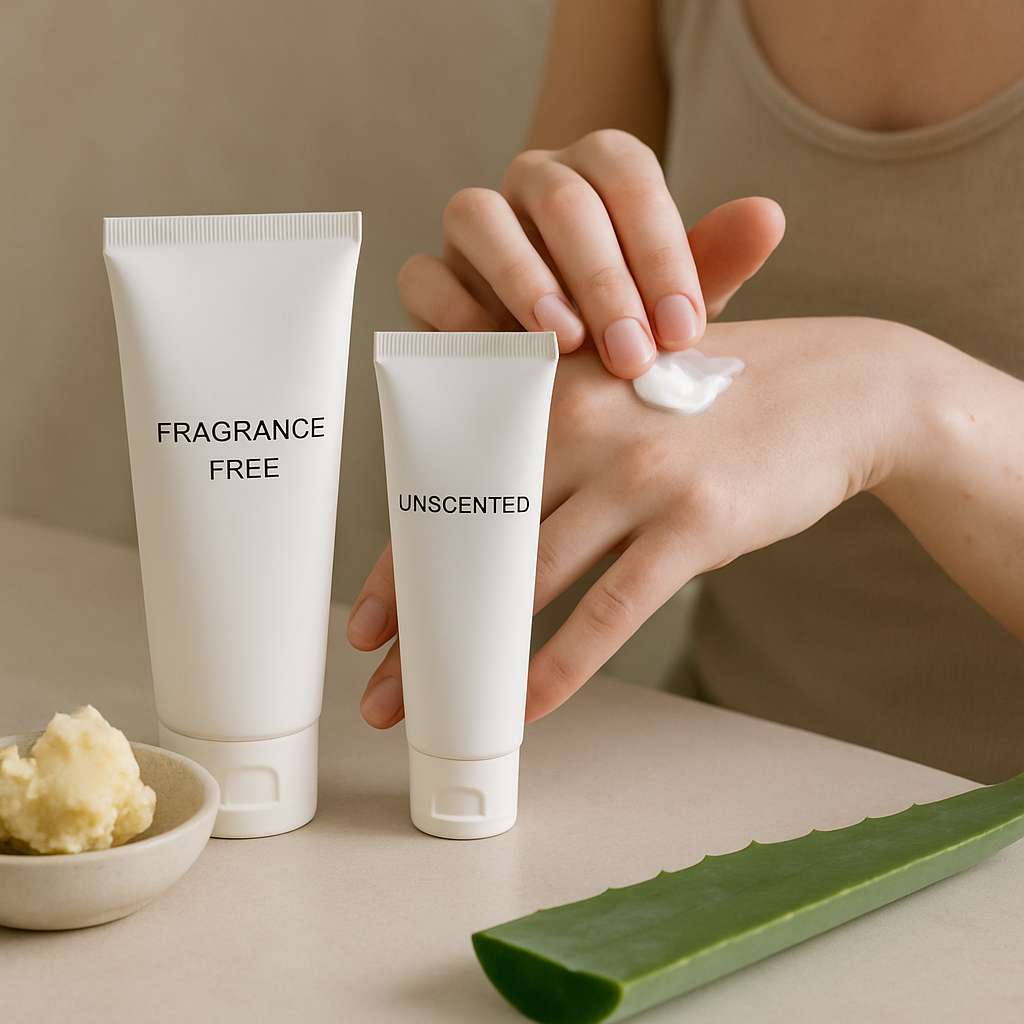
Fragrance-Free vs Unscented in Skincare
Applying your moisturizer under sunscreen can suddenly make your entire morning routine feel personal. You might start wondering what else is hiding in your skincare products behind friendly labels. One of the most confusing distinctions is between “unscented” and “fragrance-free.” They are not the same, and if you thought they were interchangeable, you are not alone.
If you’ve ever chosen an “unscented” lotion to avoid perfumes but ended up with itchy, red skin or sneezing in your bathroom, you’ve likely been misled by marketing and loose regulations.
Let’s clarify these terms, why companies use them, and how to choose skincare products that truly suit sensitive skin and allergies.
What Does “Fragrance-Free” Mean?

“Fragrance-free” means the product contains no added perfumes or scent-masking chemicals. It doesn’t guarantee the product is odorless, as natural ingredients may have their own subtle smell, but it avoids any intentional scents.
- No added fragrances or masking agents.
- The safest choice for sensitive skin, eczema, asthma, or fragrance allergies.
- Dermatologists often recommend fragrance-free products to reduce the risk of irritation.
Fragrances include chemicals like limonene and linalool, which can irritate sensitive skin. The Asthma and Allergy Foundation of America identifies fragrances as common asthma triggers. Consider fragrance-free as a clear choice for minimizing these risks.
Summary: For the least irritation and respiratory risk, always opt for fragrance-free products.
Why “Unscented” Can Be Misleading
“Unscented” products usually mean they don’t have a strong or obvious scent, but often include fragrances or masking agents to cover up the natural smell of ingredients.
This is because some raw materials, like shea butter, have distinct odors that companies mask with added chemicals. These masking fragrances can still cause allergic reactions.
The Environmental Working Group highlights that many “unscented” products contain hidden fragrance allergens.
Summary: “Unscented” does not mean free of fragrances; it generally means the scent is concealed with added chemicals.
Why the Confusion?
There are no strict FDA or FTC definitions for “fragrance-free” or “unscented,” which leads to varied interpretations and marketing tactics.
- “Fragrance-free” means no added fragrance, but natural smells remain.
- “Unscented” likely contains masking fragrances to hide odors.
Assuming unscented means fragrance-free can lead to unexpected skin or respiratory reactions.
Real Consequences
Using an unscented lotion on eczema-prone skin can trigger red patches because of hidden fragrances.
Similarly, an asthmatic person using an unscented cleaner may have breathing problems due to the masking agents.
Choose products labeled “fragrance-free” and ideally approved by dermatologists or organizations like the National Eczema Association.
Shopping Tips to Avoid Irritation
- Prefer “fragrance-free” over “unscented.”
- Carefully check ingredient lists for “fragrance,” “parfum,” or masking agents.
- Patch test new products on a small skin area before full use.
- Use trusted sources such as the Asthma and Allergy Foundation of America or National Eczema Association.
- Contact manufacturers with questions; lack of transparency is a red flag.
Why Brands Prefer “Unscented” Labels
Adding masking fragrances is cheaper and easier than reformulating products without scents. “Unscented” sounds more appealing and less clinical, making it popular in marketing.
Health Risks of Fragrance Chemicals
Fragrance blends can contain multiple undisclosed chemicals leading to:
- Skin reactions in up to 30% of eczema sufferers.
- Asthma triggers in kids and adults.
- Migraines and headaches for sensitive individuals.
- Possible hormone disruption, according to some studies.
Choosing fragrance-free products reduces these health risks.
Conclusion: Choose Labels Wisely
If you want to avoid hidden fragrance chemicals in your skincare, choose products labeled “fragrance-free.” Unscented does not guarantee the absence of fragrance additives.
What this means for your skin: Your skin and respiratory health will benefit from making informed choices.
Quick Comparison
| Term | Meaning | Contains Added Fragrances? | Best For |
|---|---|---|---|
| Fragrance-Free | No added scents or masking agents | No | Sensitive skin, allergies, asthma |
| Unscented | No obvious scent, masking likely used | Yes | People who dislike strong smells |
Helpful Resources
- National Eczema Association Fragrance-Free Products
- Asthma and Allergy Foundation of America
- Environmental Working Group Skin Deep Database
Being aware of these differences helps you protect your skin and health from unwanted irritants and allergens in your skincare routine.